
Berman Electric Solar
Solar Installation for Long Island Homes
Plan your solar, battery backup, electrical panel, and EV charging together with Berman Electric.
Licensed & insured · Owner-operated · Suffolk & Nassau counties
Solar and electrical, planned as one system
Solar touches your roof, your panel, your meter and everything you plan to plug in next. We do the electrical work ourselves, so the whole system is designed together instead of handed between trades.
Residential solar installation
Roof-mounted photovoltaic systems designed around your actual electricity usage, roof layout and shading — and around the electrical service that has to carry it.
Battery backup
Battery storage planned around the specific circuits you want to keep running, with the transfer equipment and protection an outage-capable system requires.
Compare backup power optionsPanel and service upgrades
Many Long Island homes need panel or service work before solar, a battery or an EV charger can be added safely and to code. We handle that side ourselves.
Panel & service upgradesEV charging and solar integration
If a car is in the plan, the charger circuit belongs in the design from the start so the panel, the array and the charger are sized as one system.
EV charger installationIs solar right for your home?
Solar makes sense for a lot of Long Island homes and not for all of them. These are the things we actually look at before recommending anything.
Electricity usage
We start with 12 months of usage from your utility bills. That, not a square-foot rule of thumb, sets the size of a sensible system.
Roof age and condition
Panels are meant to stay put for decades. If the roof is near the end of its life, it is usually better to deal with the roof first.
Shade and usable roof space
Orientation, pitch, trees, chimneys, vents and setback requirements all limit where panels can actually go.
Electrical service capacity
We look at the existing service, panel, busbar rating and available breaker space to see what the house can support today.
Interest in battery backup
Wanting outage coverage changes the design early, so it is worth deciding before the system is laid out.
Future electrical plans
An EV, heat pump, pool equipment or finished basement can change the right answer. We plan for what's coming, not just today.
Solar work in the field
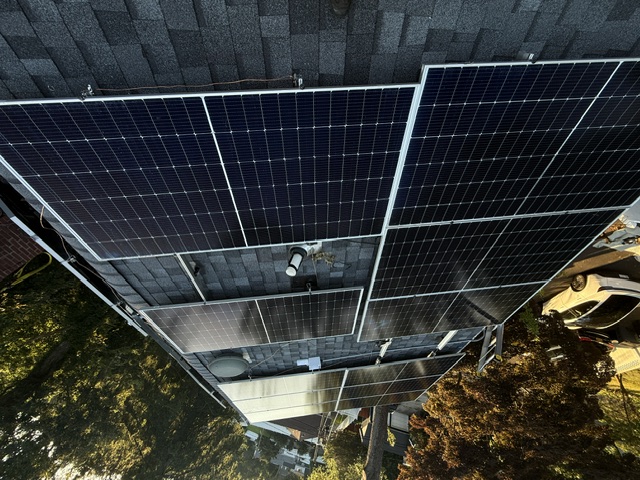
Finished roof-mounted array on a residential shingle roof. 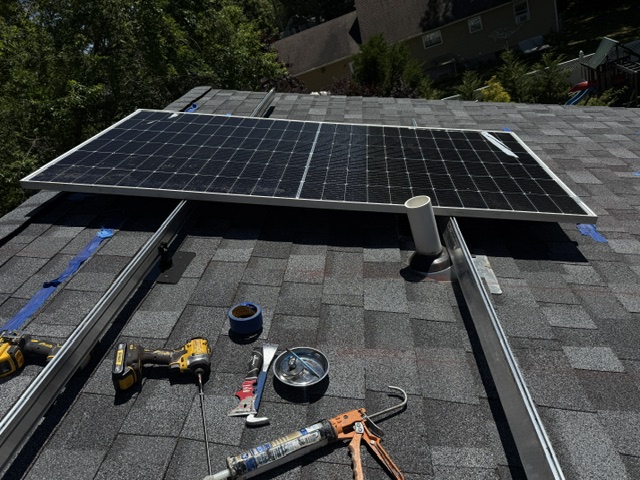
First panel set on the rails after the mounting system is laid out. 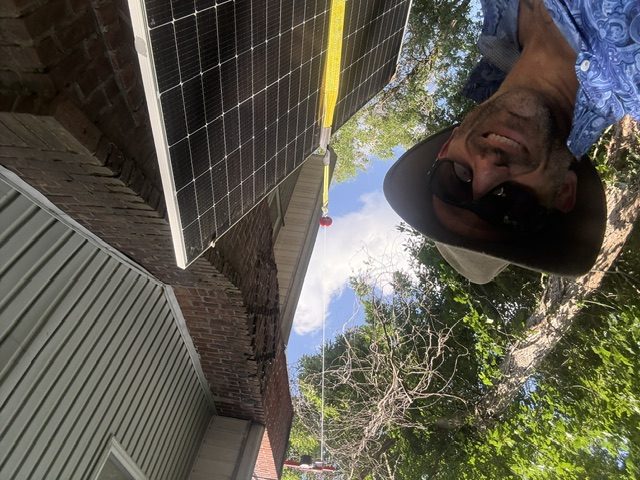
Panels hoisted to the roof one at a time during installation. 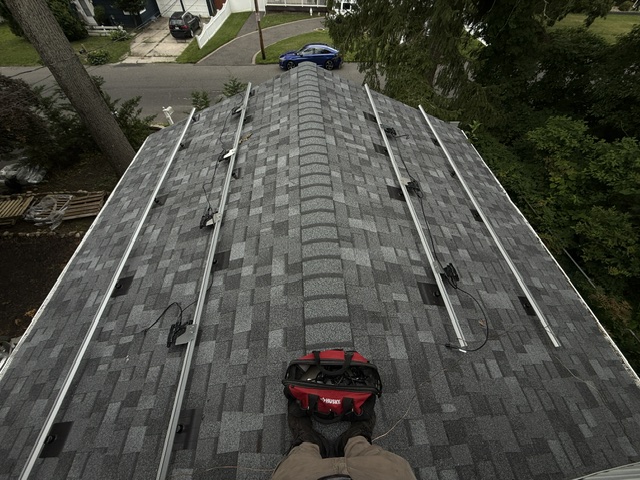
Rails and wiring runs set out before the panels are installed. 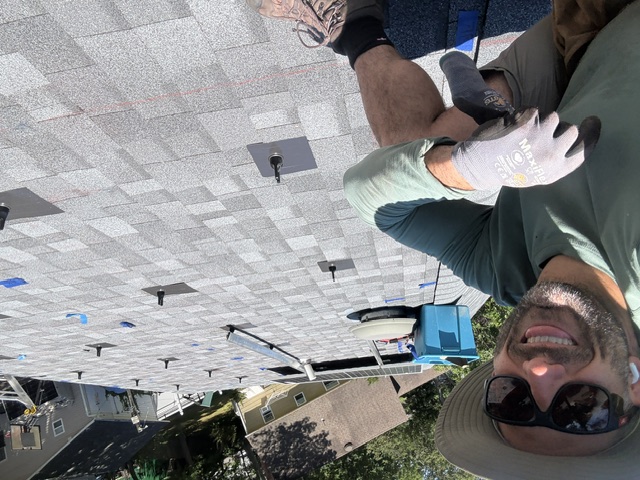
Flashed attachment points installed before the rails go on. 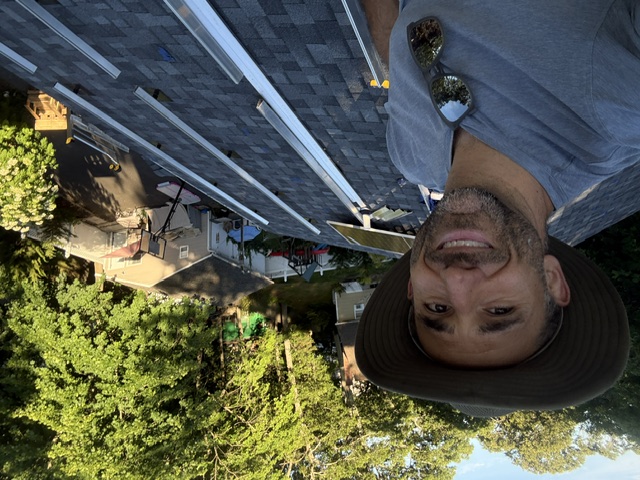
Rob on site during a residential solar installation.
How a solar installation goes
Requirements and timing depend on the property, the municipality, the utility and the scope of the project, so we won't promise approval dates we don't control.
- 01
Conversation and site assessment
We review your usage and goals, then look at the roof, attic, panel, service and meter location in person.
- 02
System design and proposal
You get a layout, equipment list and scope in writing, including any electrical work the project needs.
- 03
Engineering, permits and utility application
Plans are prepared for the municipality and the interconnection application goes to the utility.
- 04
Installation
Mounting, array, conduit, inverter and any panel or service work are completed by our own licensed crew.
- 05
Inspections and permission to operate
Electrical and building inspections happen first, then the utility grants permission to operate before the system is switched on.
Battery Backup
Solar alone will not keep the lights on
An ordinary grid-connected solar system shuts down when the utility grid goes down. That's a safety requirement, not a defect. Running your home through an outage takes a system designed and equipped for it.
Battery sizing starts with the loads you actually want to support. Keeping a refrigerator, some lighting, internet and a well pump alive is a very different system than running central air conditioning. We work through those choices with you and separate the backed-up circuits properly.
If whole-home coverage during long outages is the priority, a generator may be the better fit — or a sensible combination. We'll tell you either way.
Solar questions Long Island homeowners ask
What affects the cost of a solar installation?
System size, roof type and pitch, the mounting and attachment method, conduit routing, inverter selection, whether a battery is included, and any panel, service or meter work the house needs. Permitting and utility interconnection requirements also vary by municipality. We put the scope in writing after the site assessment rather than quoting from a satellite photo.
Is my roof suitable for solar?
It depends on usable area, orientation, pitch, shading, structure and code-required setbacks and pathways. A smaller array on a good section of roof is often a better project than filling every surface.
Should I replace my roof first?
If the roof is near the end of its service life, generally yes. Removing and reinstalling an array later costs real money, so it is usually cheaper to do roofing work before panels go on.
Will solar power my home during an outage?
Ordinary grid-connected solar does not. For safety it shuts down when the utility grid goes down. Powering your home through an outage requires a system specifically designed and equipped for it — typically battery storage with the right transfer equipment, or a separate generator setup.
Can I add a battery later?
Often, but it is much simpler when the original design anticipates it. Battery-ready planning affects inverter choice, equipment location, and how backed-up circuits are separated. Tell us during the assessment if a battery is even a maybe.
Will I need a panel upgrade?
Sometimes. It depends on your existing service size, panel and busbar ratings, breaker space and what else you plan to add. We evaluate this as part of the assessment instead of discovering it mid-project.
Can solar support EV charging?
Yes, and the two are worth planning together. Charging adds meaningful load, so the array size, the panel capacity and the charger circuit should be worked out as one plan.
What happens during permitting and utility approval?
Plans are submitted to your municipality for permits and an interconnection application goes to the utility. After installation the work is inspected, and the utility issues permission to operate before the system runs. Requirements and timelines vary by town, utility and project, so we won't promise a date we don't control.
Serving Long Island homeowners
Berman Electric works with homeowners across Suffolk and Nassau counties from our base in Ronkonkoma. If you're on Long Island, start with an assessment and we'll tell you honestly whether your home is a good candidate.
Tell Us About Your Solar Project
A few details are enough to get started. Rob reviews every request personally.