Field Report · Residential Electrical
We Didn't Just Install a Ceiling Fan. We Brought Power to a Room That Never Had It.
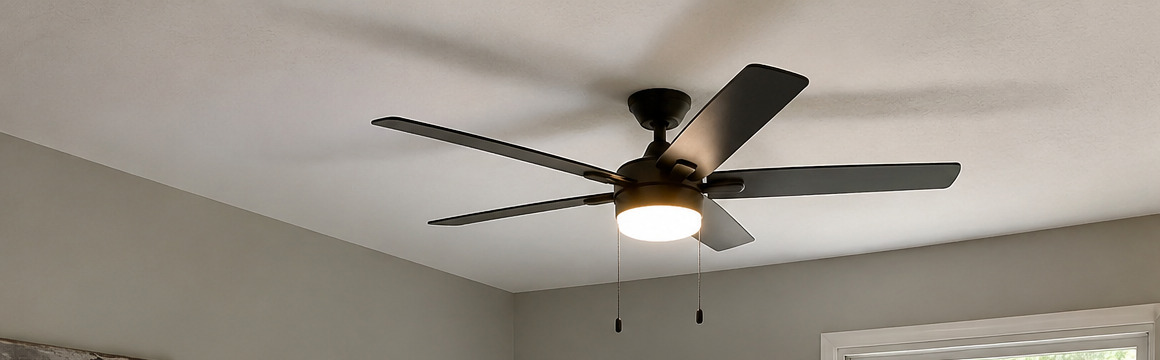
A homeowner wanted a ceiling fan installed in a room with no existing wiring. This project required planning, new electrical infrastructure, and a clean finished installation.
Completed by Berman Electric
Service
Ceiling Fan Installation
Category
Residential Electrical
Status
Completed
Time Required
1 Day
Location
Long Island, NY
3 min read · Documented on-site
Project Gallery
From bare ceiling to finished install
The Homeowner's Goal
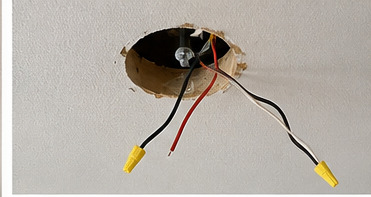
The homeowner wanted to add a ceiling fan to improve comfort but the room had never been wired for one. Instead of simply replacing an existing fixture, this project required creating safe electrical infrastructure from scratch.
What I Found
After inspecting the space, I confirmed there was no existing wiring or fan-rated support where the customer wanted the fixture installed. Rather than taking shortcuts, I planned a route that would minimize disruption while providing a code-conscious installation designed for long-term reliability.
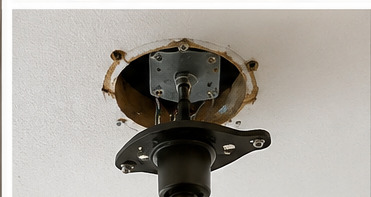
A standard lighting box is only built to hold a few pounds of static weight. A ceiling fan adds constant rotational force and vibration on top of its weight. A fan-rated box is engineered and listed to handle that ongoing movement and is anchored to structural framing — without it, a fan can loosen, wobble, or eventually fall. Using the correct box isn't a preference; it's a code requirement and a safety baseline.
My Thinking
How I approached the problem
Before pulling wire, I evaluated the available power source, structural support, and the cleanest routing path. The objective wasn't just making the fan operate. It was creating an installation that would remain dependable and serviceable for years.
In the field
Step-by-Step Execution
- 1
Evaluated the existing electrical system
Identified the optimal power source and confirmed there was capacity to safely add the new fan circuit.
- 2
Planned the wiring route
Mapped a path that would minimize drywall damage and keep the finished work clean.
- 3
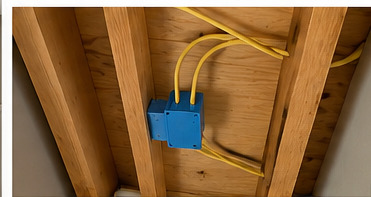
Ran new electrical wiring
Pulled new wiring to the desired fan location, secured along the framing per code.
- 4
Installed proper fan support
Mounted a fan-rated box and bracket anchored to structure to carry the fan's weight and motion.
- 5
Completed connections and mounted the fixture
Made the wiring connections, then securely mounted and balanced the fan.
- 6
Tested and verified safe operation
Confirmed correct operation on all speeds and the light, verified safety, and cleaned up the space.
What Homeowners Should Know
A ceiling fan should never be mounted to a box not designed to support its weight and movement.
Running new wiring often requires more planning than replacing an existing fixture.
Good installations prioritize future reliability, not just immediate operation.
Project Outcome
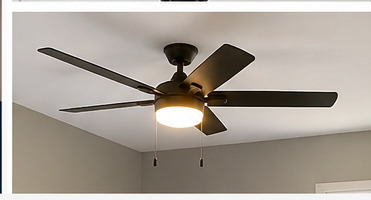
The homeowner now has a professionally installed ceiling fan in a location that previously had no electrical infrastructure. The finished installation is clean, functional, and designed for long-term reliability.
"Rob did a great job installing my new ceiling fan and running wiring where none existed before. He was responsive, punctual, and clearly skilled at what he does."
Verified Homeowner — Long Island, NY
Frequently Asked Questions
Can a ceiling fan be installed where there's no existing wiring?
Yes. It requires more planning than a simple swap, but new wiring can be run to almost any ceiling location. The key is identifying a safe power source, routing wiring with minimal disruption, and installing fan-rated support.
Do I need a special electrical box for a ceiling fan?
Yes. Ceiling fans must be mounted to a fan-rated box anchored to structural framing. A standard lighting box isn't built to handle a fan's weight, rotation, and vibration over time.
How long does this kind of installation take?
A ceiling fan installation in a room with no existing wiring typically takes about a day, depending on access and the routing path. Simple fixture swaps are much faster.
Related Services
Other work we do across Long Island
Knowledge Center
Learn more about this kind of work
Need Electrical Work Done Right the First Time?
Whether it's a simple fixture replacement or running entirely new wiring, Berman Electric delivers clean, thoughtful, professional installations across Long Island.